The NACDL Foundation for Criminal Justice preserves and promotes the core values of the National Association of Criminal Defense Lawyers and the American criminal justice system.
Support Us NowPage Hero
First Amendment Resources
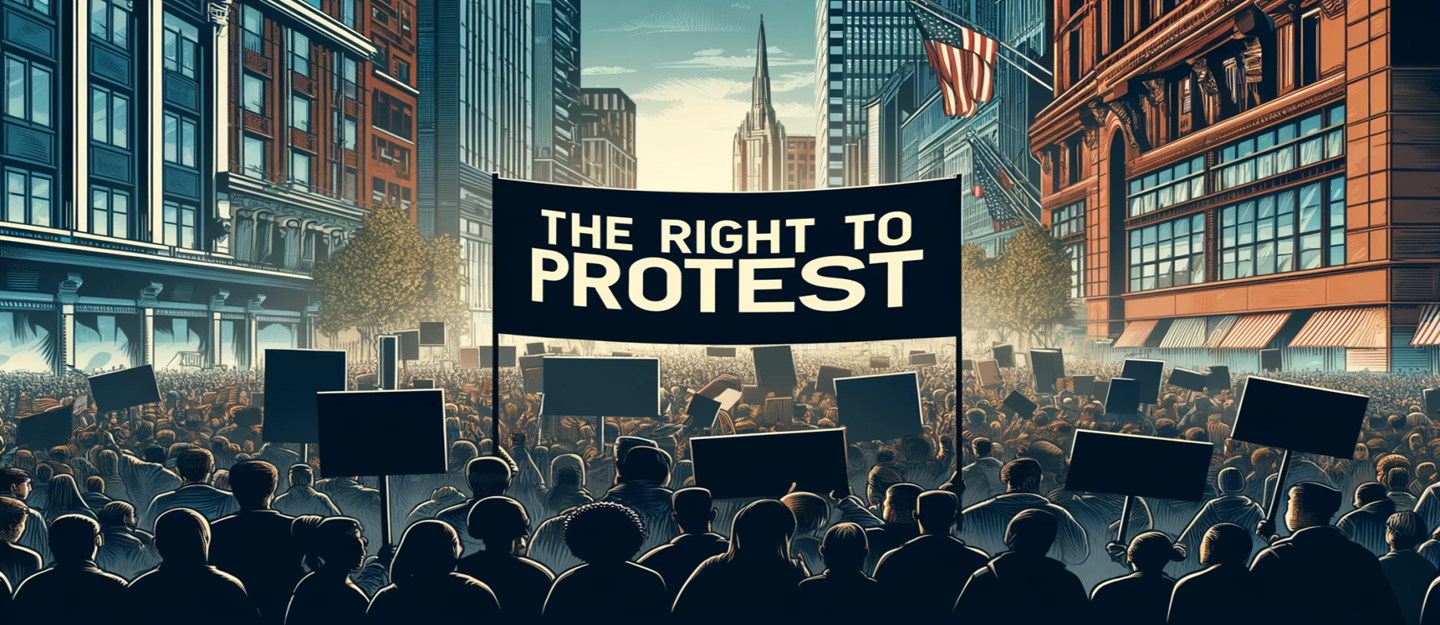
This page provides resources related to the represention of those whose exercise of their First Amendment rights result in arrest and prosecution. Irrespective of political ideology, the right to protest and petition the government for a redress of grievances is the foundation of American democracy. People charged with criminal offenses while standing up for their principles are entitled to a zealous, robust defense.
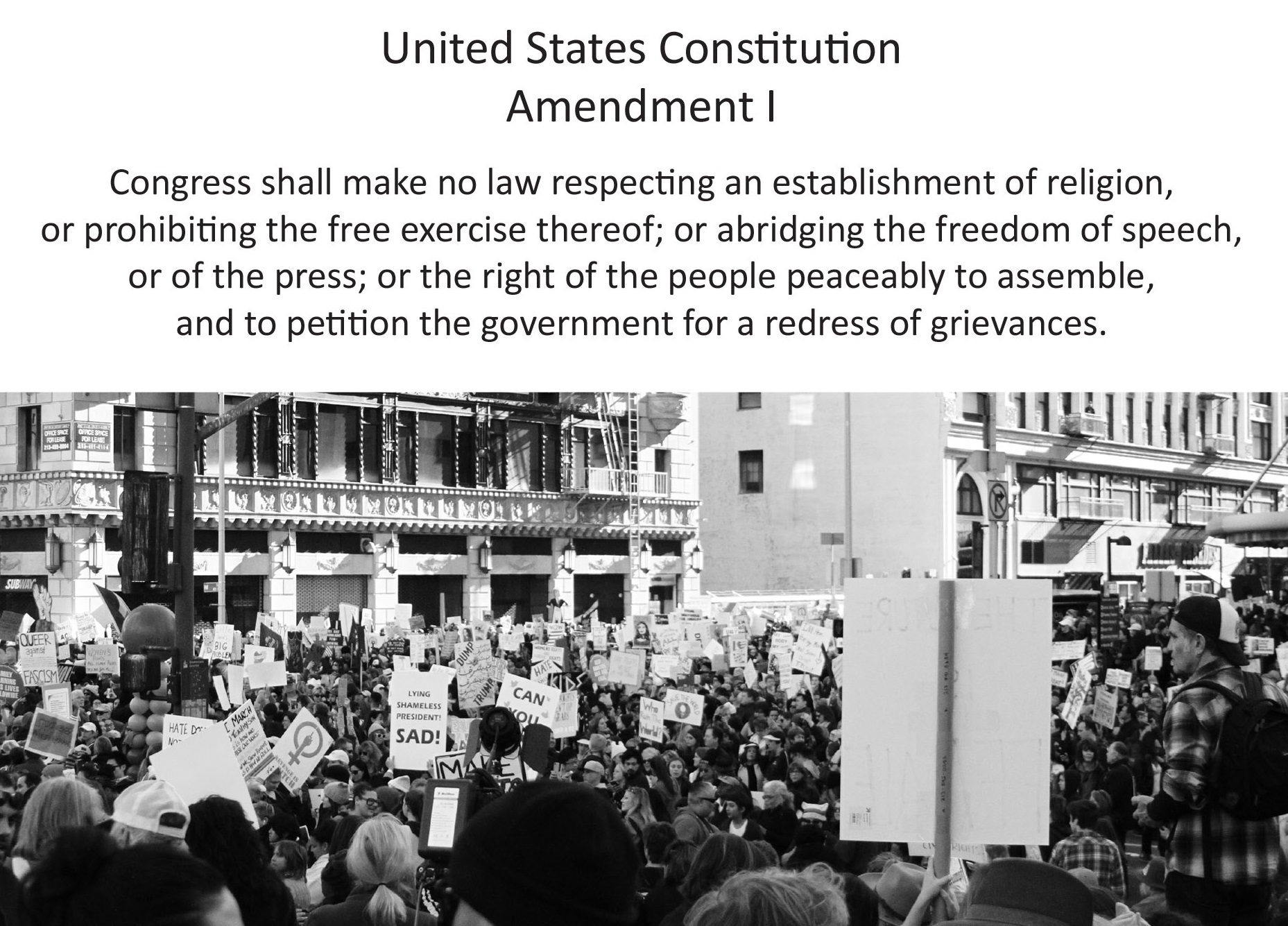
Sometimes referred to as the "Five Freedoms," the First Amendment protects the rights to freedom of religion, speech, press, assembly, and petition the government.
Amicus Briefs Key Cases News Resources
NACDL has a long and proud tradition of fighting to protect constitutional principles and standing up for the rights of individual against the power of the government. In 2025, responding to increased charging that departed from historical prosecutorial practices, including the arrest and prosecution of individuals exercising their First Amendment rights, NACDL launched its Criminal Case Tracker. The Tracker monitors and analyzes select federal prosecutions that reflect unusual or aggressive uses of criminal law.
Tracker Observations Report Tracker Interactive Map Share a Case
Whether the resulting criminal charges are misdemeanors or felonies, the consequences of criminal prosecutions of those exercising their First Amendment rights are significant and long-lasting. Not only do the individuals themselves face direct and collateral consequences from their arrest, but this can have a chilling effect - discouraging others from speaking out.
Learn more about the issues and how NACDL and others are working to protect those facing criminal charges below.
NACDL Press Releases and Articles
- Nation’s Criminal Defense Bar Condemns Federal Indictment of SPLC, Apr. 23, 2026
- NACDL Statement on ICE Officers' Conduct and the Preservation of Due Process, Jan. 24, 2026
- NACDL Condemns Executive Order Targeting Flag Burning, Citing Pernicious Pattern of Government Overreach, Aug. 25, 2025
- Nation's Criminal Defense Bar Condemns Executive Overreach, Deployment of National Guard in Los Angeles, June 9, 2025
- Criminalizing the Tradition of Protest, by Barry Pollack, The Champion (Apr. 2017)
NACDL Resources
- NACDL’s Fourth Amendment Center has resources available to assist attorneys seeking to challenge the use of new law enforcement technologies in their cases. Specifically, counsel should be alert to unlawful device searches, seizures, and compelled decryption orders, as well as police access to cell phone location information and the use of facial recognition. The Fourth Amendment Center has manuals and sample motions available as well.
- Digital Hygiene for Defense Lawyers webinar by Matt Mitchell
- The Fourth Amendment Center is available to consult with defense counsel and provide direct litigation assistance in cases involving these issues. Contact 4AC@nacdl.org for more resources or litigation support.
Training Videos
- Representing Protesters webinar presented by Martin Stolar, criminal defense and civil rights attorney (October 11, 2017)
- Defending Protesters Facing Criminal Charges webinar presented by Jeffery Robinson and Lee Rowland, ACLU (June 27, 2017)
Other Resources
- National Lawyers Guild
- Recording Police and Government Agents
- Know Your Rights: Recording and Documenting Police and Federal Agents (ACLU)
- Recording Law Enforcement: First Amendment Right or Arrestable Offense? (Freedom Forum)
- Protesting: Know Your Rights (General)
- Digital Survelliance
- How to Protest Safely in the Age of Survelliance, Andy Greenberg & Lily Hay Newman, Wired, (Jan. 8, 2026)
- Digital Security Guidelines for Protests, American Friends Service Committee (updated Nov. 14, 2025)
- Survelliance Self-Defense, Electronic Frontier Foundation
- House of Reps Lee, Brown, & Ansari Letter re: spyware to K. Noem, Oct. 6, 2025
NACDL Criminal Case Tracker
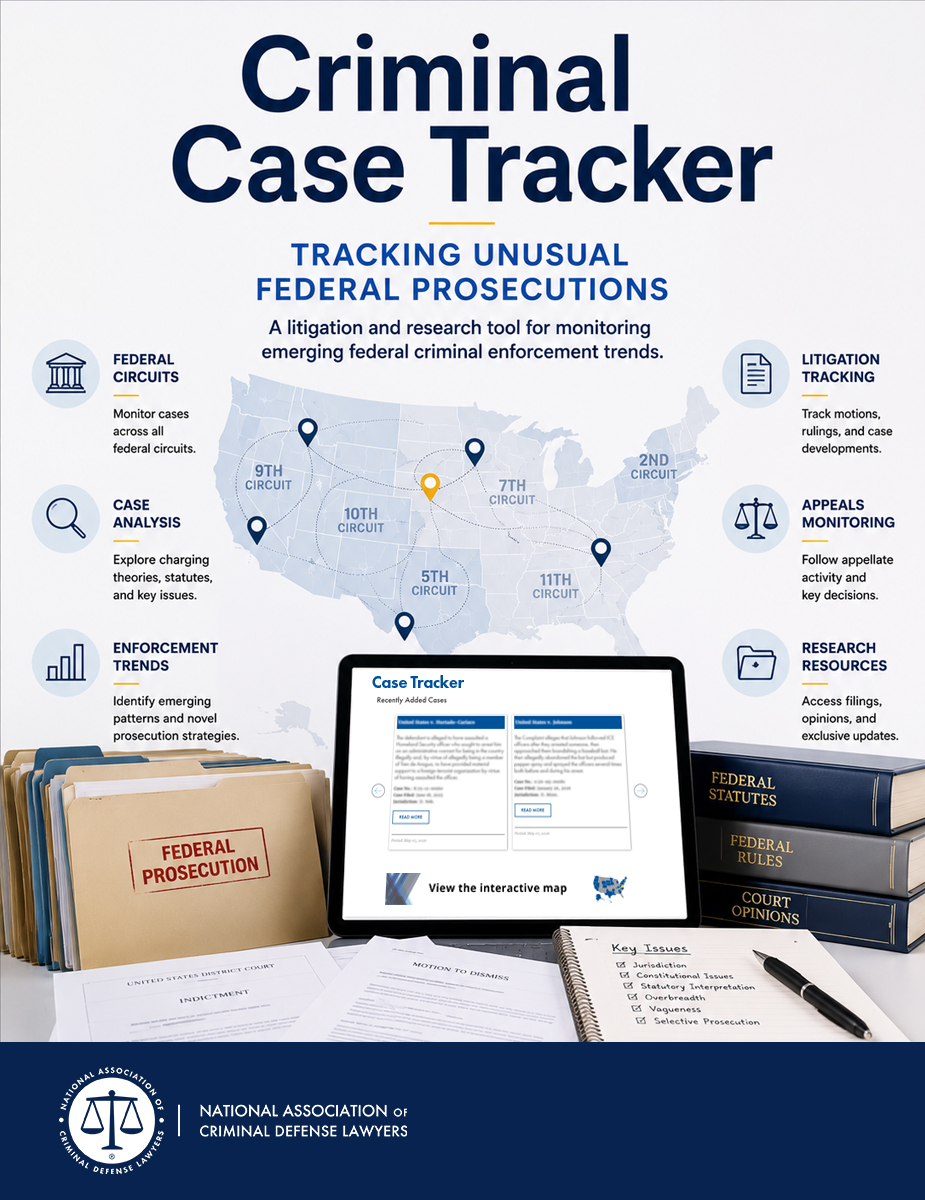
In response to significant shifts in federal criminal enforcement that depart from historical prosecutorial practices, NACDL has launched a Criminal Case Tracker to monitor and analyze select federal prosecutions that reflect unusual or aggressive uses of criminal law. “Unusual” refers to charging decisions, enforcement theories, or prosecutorial tactics that mark a departure from past norms. The Tracker provides defense counsel with access to key filings, decisions, and outcomes to support effective advocacy.
US Supreme Court on free speech and criminal prosecution
"[A] function of free speech under our system of government is to invite dispute. It may indeed best serve its high purpose when it induces a condition of unrest, creates dissatisfaction with conditions as they are, or even stirs people to anger. Speech is often provocative and challenging. It may strike at prejudices and preconceptions and have profound unsettling effects as it presses for acceptance of an idea. That is why freedom of speech, though not absolute is nevertheless protected against censorship or punishment, unless shown likely to produce a clear and present danger of a serious substantive evil that rises far above public inconvenience, annoyance, or unrest." Terminiello v. City of Chicago, 337 US 1 (1937) (citations omitted)
Fighting words: Defined by the US Supreme Court as words which "by their very utterance, inflict injury or tend to incite an immediate breach of the peace," these words may fall outside the purview of the First Amendment and be subject to criminal charges. Even offensive and inflammatory speech is protected unless that speech is:

- Directed to inciting or producing imminent lawless action; and
- Is likely to incite or produce such action.
Key Supreme Court Cases on Criminalizing Speech:
- DeJonge v. State of Oregon, 299 US 353 (1937)
- Chaplinsky v. New Hampshire, 315 US 568 (1942)
- Terminiello v. City of Chicago, 337 US 1 (1949)
- Brandenburg v. Ohio, 395 US 444 (1969)
- Hess v. Indiana, 414 US 105 (1973)
- Texas v. Johnson, 491 US 397 (1989)
- R.A.V. v. City of St. Paul, 507 US 377 (1992)