Grand Jury
In federal felony cases, a prosecutor cannot just charge a person with the crime. The U.S. Constitution requires a grand jury indictment.
For years, rather than a bulwark against "hasty, malicious and oppressive prosecution," the federal grand jury was too often a rubber stamp, leading many to agree that "a good prosecutor could get a grand jury to indict a ham sandwich."
But grand juries can be a check against prosecutorial overreach. In fact, they have become more of one in recent times. This is not due to legal or systemic changes. It is almost entirely due to the vigilant efforts of ordinary people who have served on grand juries and have rejected some overzealous attempts at federal prosecution. Some of these cases are included in the NACDL Criminal Case Tracker.
NACDL Criminal Case Tracker
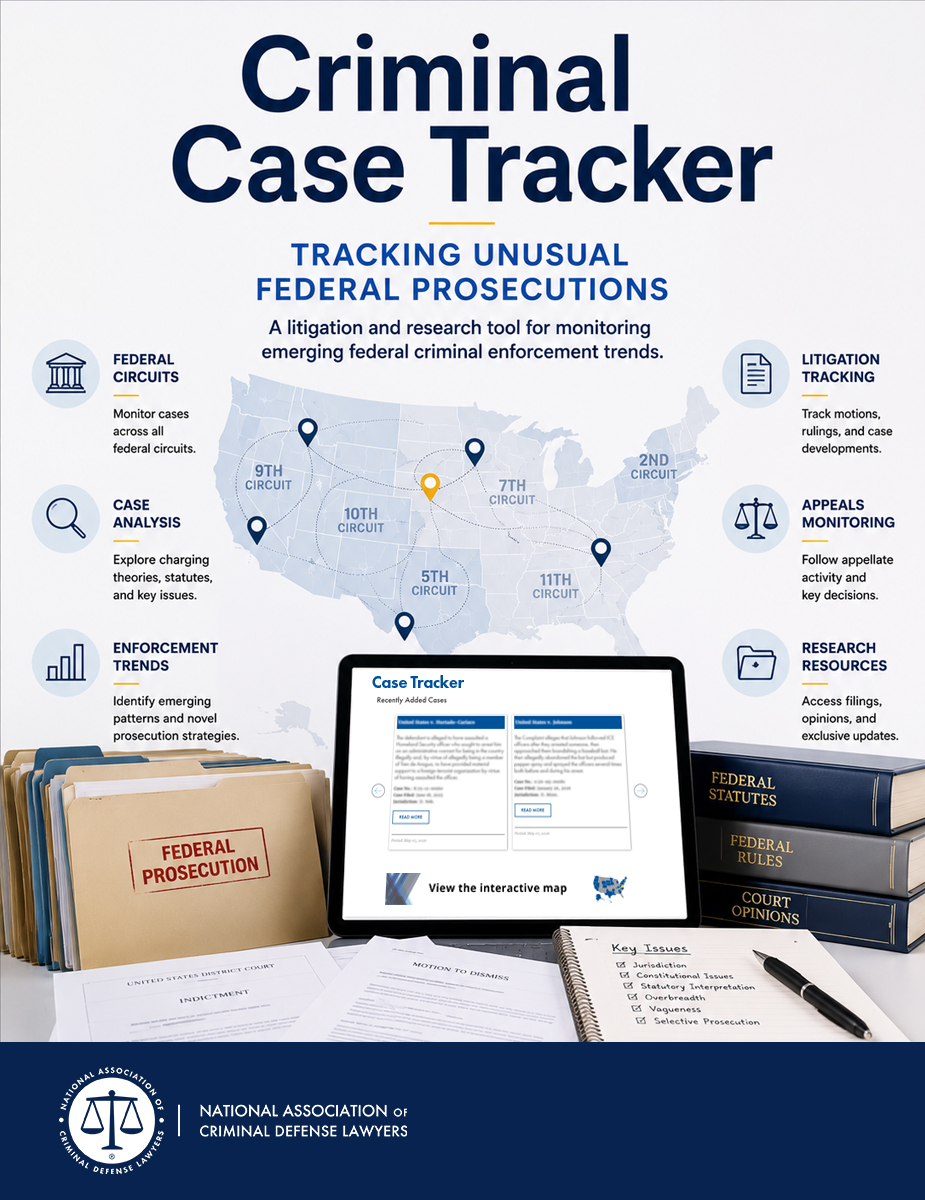
In response to significant shifts in federal criminal enforcement that depart from historical prosecutorial practices, NACDL has launched a Criminal Case Tracker to monitor and analyze select federal prosecutions that reflect unusual or aggressive uses of criminal law. “Unusual” refers to charging decisions, enforcement theories, or prosecutorial tactics that mark a departure from past norms. The Tracker provides defense counsel with access to key filings, decisions, and outcomes to support effective advocacy.
Modest, but important, legal changes could help grand juries be an even stronger bastion against improper prosecutions.
NACDL calls upon Congress to improve the federal grand jury and enact the proposals outlined in our Federal Grand Jury Reform Report & Grand Jury "Bill of Rights."
Among the critical, workable reforms detailed in that report are:
- the right to counsel for grand jury witnesses who are not receiving immunity;
- an obligation to present evidence which may exonerate the target or subject of the offense; and
- the right for targets or subjects to testify.
Webinar – Reexamining the Grand Jury: Prosecutors, Police, and Race (2015)
The grand jury has long drawn criticism for failing to serve its purpose as a shield against unwarranted charges. A new charge has been leveled: that prosecutorial influence over the grand jury permits law enforcement misconduct to go unpunished. Both facets of the issue were discussed in turn by two distinguished panels of experts: the first panel addressed Due Process & the Grand Jury: Protecting Targets and Witnesses and the second panel examined Equal Justice & the Grand Jury: Achieving Racial Fairness.
Evaluating Grand Jury Reform in Two States: The Case for Reform
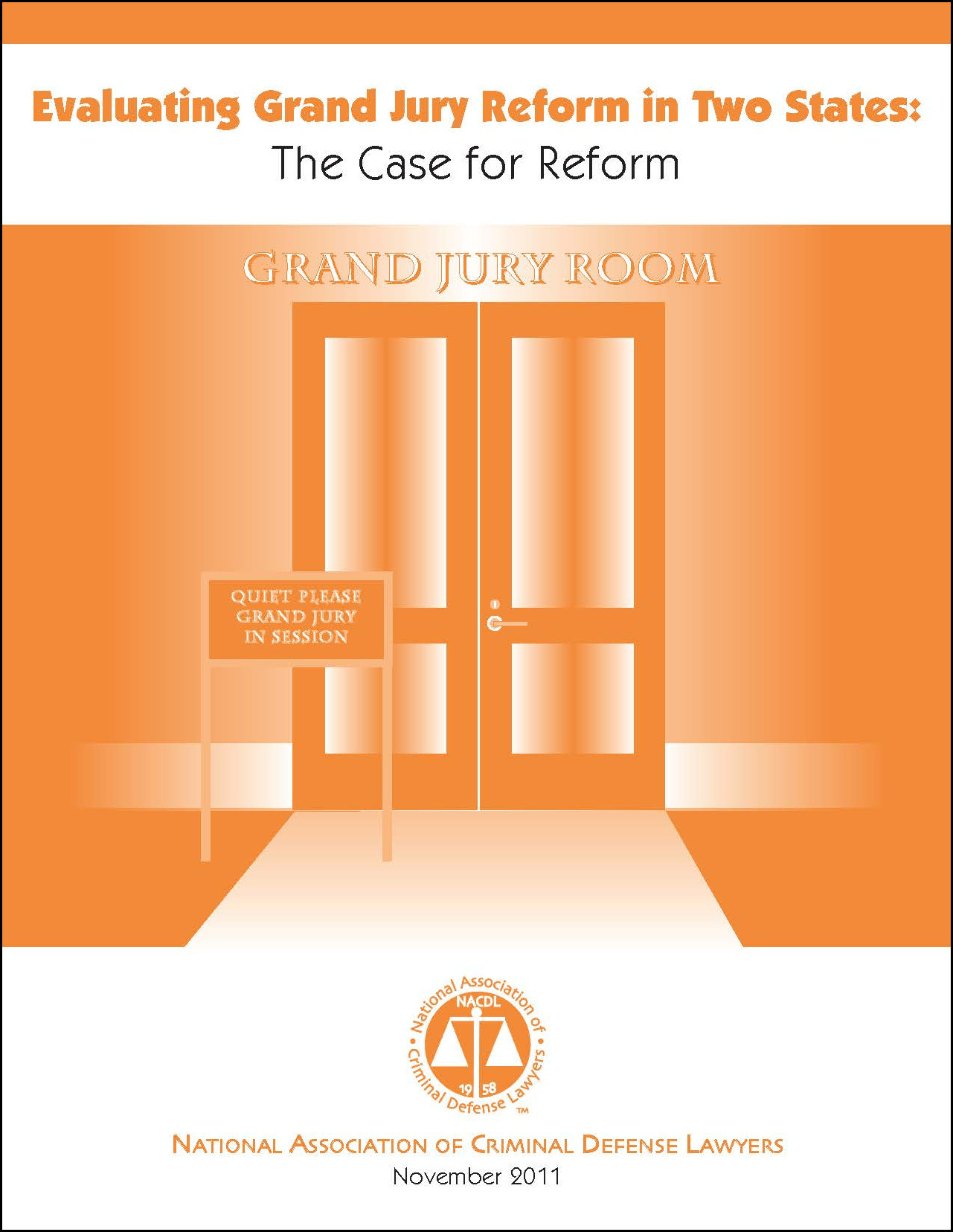
NACDL issued a groundbreaking new report on restoring and reforming the grand jury system. This research reflects an in-depth study of grand jury reform in two states – New York and Colorado – and produced four reform recommendations. [Released November 2011]
Resources
- Reform Proposals
- New Mexico Court Imposes Pre-Indictment Mechanism that Enables Investigation Targets to Alert Grand Jury to Exculpatory Evidence (2009)
- Reform resources
- Articles, Editorials, & News