When used responsibly, generative AI can improve efficiency, support legal research, and help attorneys manage heavy caseloads. However, it also raises concerns about confidentiality, accuracy, fairness, and ethical compliance. This white paper examines AI’s benefits, risks, and limitations; discusses barriers to adoption such as cost and training; and offers guidance on tool selection, oversight, data security, and courtroom use. The paper also includes examples of AI applications in defense work, a roadmap for developing organizational AI policies, and recommendations for training and governance. Ultimately, it encourages defenders to balance innovation with responsibility so that AI strengthens competent, ethical, and effective representation.
This white paper also serves as a call to action. The adversarial nature of the criminal legal system demands that defenders achieve parity or risk providing representation that falls short of constitutional and ethical standards. A model AI Use Policy is provided in Appendix A. It is meant to serve as a model only, and practitioners and firms are expected to tailor its provisions in ways that best reflect the workload and culture of each individual attorney or office.
NACDL has launched a Task Force on Artificial Intelligence to establish policy and the ethics of artificial intelligence and to monitor the impact that AI will have on criminal defense lawyers and their clients. The Task Force represents one effort to develop collective defense standards. Individual offices and bar associations can contribute by sharing policies, training materials, and litigation strategies. Through coordinated effort, the defense bar can ensure that AI advances ethical justice rather than undermines it.
Parity in Practice: The Defender's Duty to Ethically Use AI
Resolution to Publish White Paper on Ethical Uses of Artificial Intelligence and a Model AI Use Policy, NACDL Board of Directors (February 2026)
Interview with report author Mason Clark on the Public Defenseless podcast (Aug 2026)
NACDL Artificial Intelligence Task Force
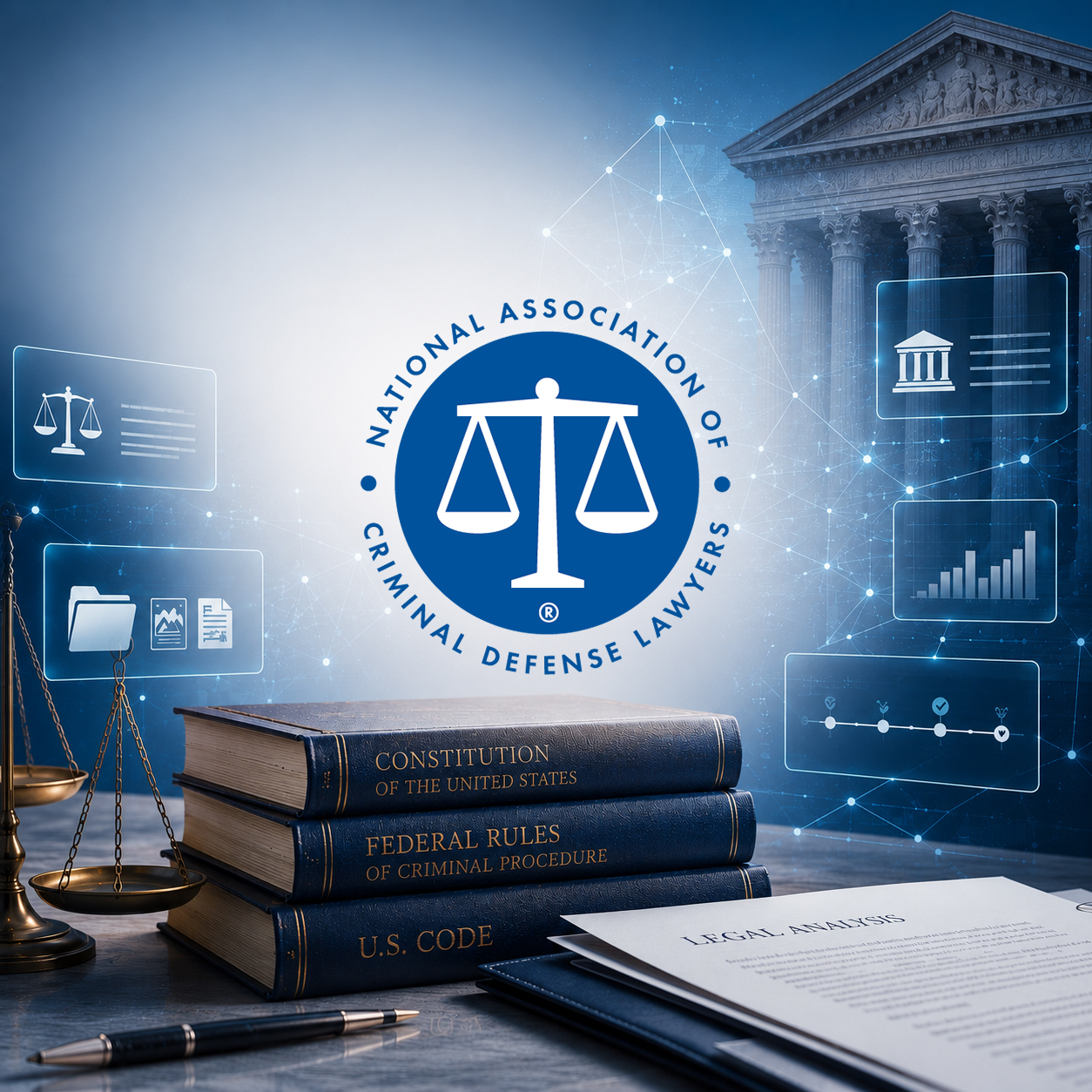
NACDL's Artificial Intelligence Task Force examines how AI and emerging technologies are reshaping policing, prosecution, and criminal defense practice. Explore resources to help defense attorneys understand and challenge these technologies.
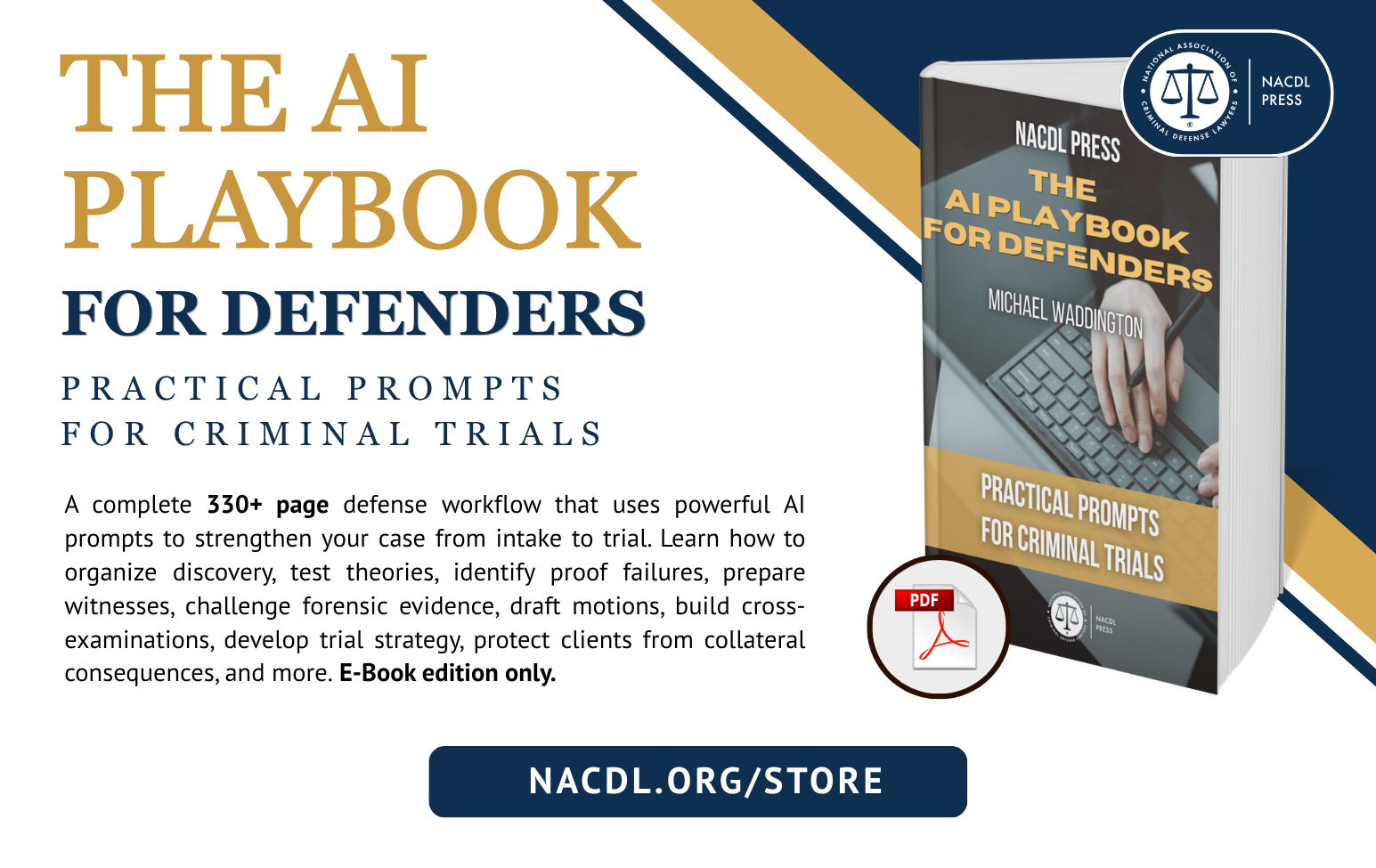
2027 Spring AI in Law Tech Seminar
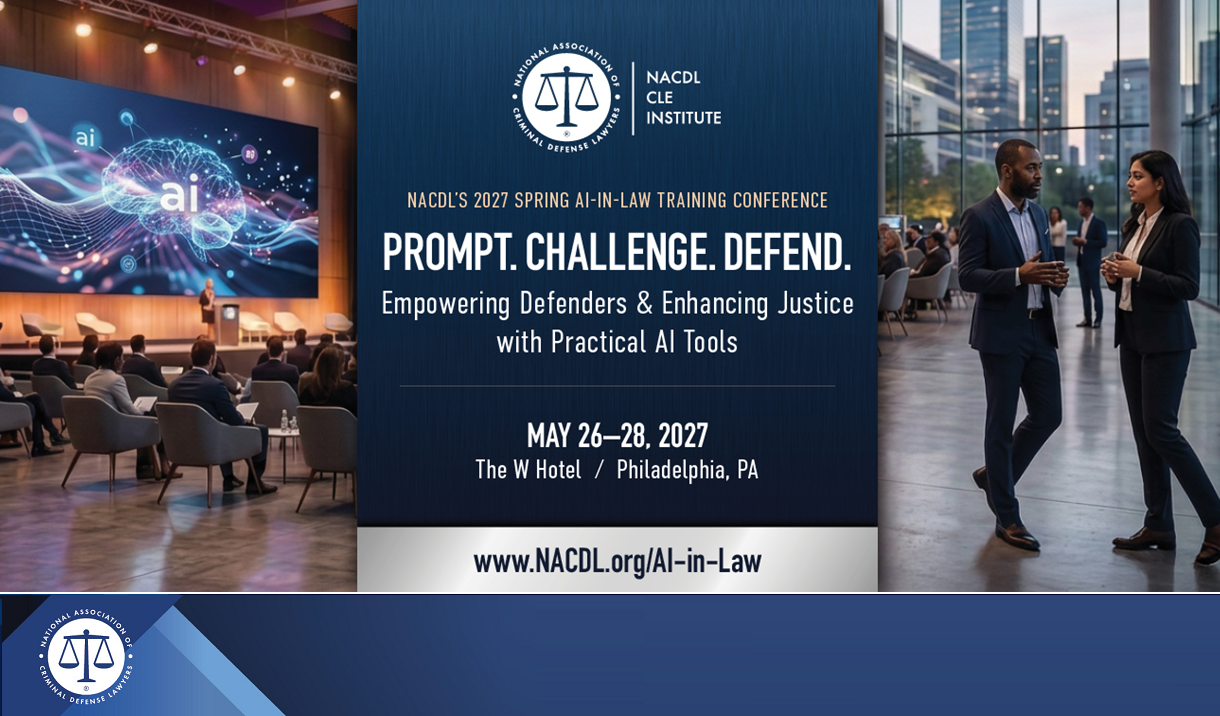
"Prompt. Challenge. Defend. Empowering Defenders & Enhancing Justice with Practical AI Tools"
LOCATION: W Philadelphia Hotel, Philadelphia, PA
DATES: May 26-28, 2027