
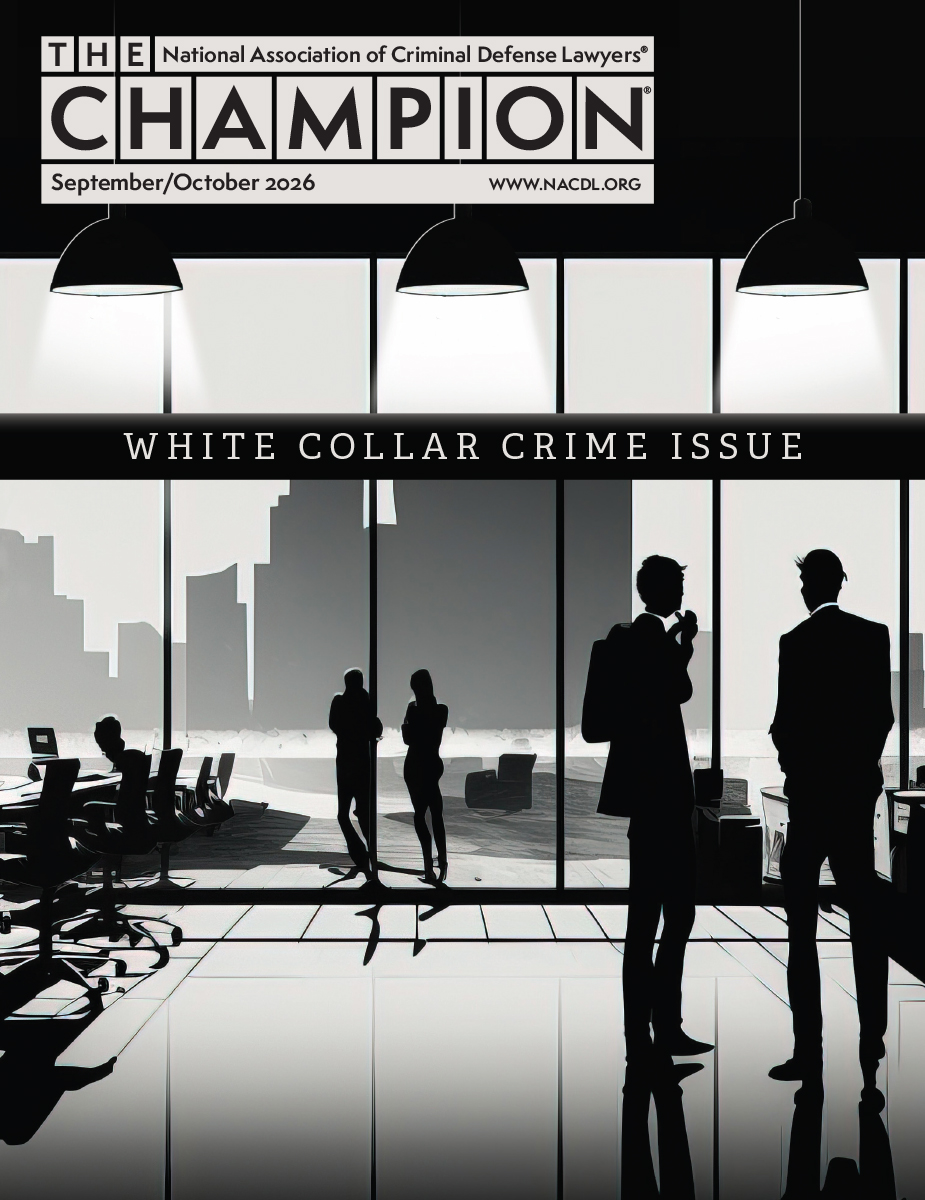
September/October 2026
For a corporate client considering voluntary disclosure, what are the implications of DOJ’s March 2026 corporate enforcement and voluntary self-disclosure policy?
Articles in this Issue
-
Affiliate News
What events are NACDL affiliates hosting this month? Find out here.
-
Book Review: By Hands Now Known by Margaret A. Burnham
This month Jon M. Sands reviews By Hands Now Known: Jim Crow’s Legal Executioners by Margaret A. Burnham.
-
Book Review: Death in Custody by Roger A. Mitchell Jr. and J.D. Aronson
This month Matthew T. Mangino reviews Death in Custody: How America Ignores the Truth and What We Can Do About It by Roger A. Mitchell Jr. and J.D. Aronson.
-
Compliance Programs, Declinations, and the DOJ’s New Corporate Enforcement Policy
The implications of DOJ’s March 2026 corporate enforcement and voluntary self-disclosure policy (CEP) include a focus on speedy investigations and self-reporting, disciplined internal investigations, specific and measurable cooperation, and early decision-making. This article summarizes the CEP and provides a practitioner checklist for advising corporate clients considering voluntary disclosure.
-
From the President: Becoming the Lawyer Your Client Needs
How do lawyers learn? The sooner lawyers grow, the more they can help their clients. The fastest way to improve at anything is through deliberate practice.
-
Introducing the Criminalization of Voting Rapid Response Team
To determine whether they are eligible to vote, system-impacted people in many states are forced to navigate a complicated web of state laws governing felony disenfranchisement and voting rights restoration. At the federal level, prosecutions of noncitizens who register and vote are on the rise. NACDL’s Rapid Response Team is ready to help.
-
Loper Bright Shut the Door on Deference to Agencies, but May Open a Window
for White Collar Criminal Defense Lawyers
Amelia Schmidt urges white collar lawyers to consider whether the Supreme Court’s Loper Bright decision gives them a basis to challenge a regulatory-based criminal charge by arguing that an agency has either exceeded its authority under a statute or, in the alternative, that the statute unconstitutionally lets the agency define crimes.
-
NACDL News: Four Honored at NACDL’s Annual Meeting
NACDL News for September-October 2026
-
NACDL News: Gerald Lippert Marks 25 Years of Service at NACDL
NACDL News for September-October 2026
-
NACDL News: Katherian D. Roe Receives Champion of Justice Award
NACDL News for September-October 2026
-
NACDL News: NACDL Hails Landmark Supreme Court Ruling Upholding Privacy Rights in the Digital Age
NACDL News for September-October 2026
-
NACDL News: NC Lawyer C. Melissa Owen Installed as President of Nation’s Criminal Defense Bar
NACDL News for September/October 2026
-
NACDL News: Students and Practitioners Gather at Stetson
NACDL News for September-October 2026
-
Pozner on Cross: White Collar Defenses Making Use of Supposedly Incriminating Documents or Conduct
Larry Pozner discusses white collar defenses making use of supposedly incriminating documents or conduct.
-
Reviews in Review
Reviews in Review for September-October 2026.
-
Stretched Too Far: Abouammo and the Limits of § 1519 Venue
The government prosecuted Ahmad Abouammo under 18 U.S. C. § 1519 in a jurisdiction where the alleged crime did not occur, and the Supreme Court struck the conviction down for lack of venue. It sounds simple enough, but there is more here than meets the eye. The Supreme Court’s decision gives rise to powerful arguments criminal defense attorneys can use in cases beyond this white collar obstruction statute.
-
Supreme Court 2025–2026 Criminal Law Review
Elizabeth Unger Carlyle recaps some of the important criminal law cases of the 2025-2026 Term.