
August 2026
What is the role of “place” in mitigation? How can creating narratives and exhibits that incorporate geographic context provide a foundation for individualized sentencing?
Articles in this Issue
-
Affiliate News
What events are NACDL affiliates hosting this month? Find out here.
-
Book Review: Bone Valley by Gilbert King
This month Teri Sopp reviews Bone Valley: A True Story of Injustice and Redemption in the Heart of Florida by Gilbert King.
-
Book Review: Death Row Welcomes You by Steven Hale
This month Cara Wieneke reviews Death Row Welcomes You: Visiting Hours in the Shadow of the Execution Chamber by Steven Hale.
-
Book Review: Misunderstood By Allen Iverson with Ray Beauchamp
This month Stephen Sady reviews Misunderstood by Allen Iverson with Ray Beauchamp.
-
Book Review: Vision by David S. Tatel
This month Tucker Carrington reviews Vision: A Memoir of Blindness and Justice by David S. Tatel.
-
Confidentiality at Risk: How to Evaluate Technology Vendors Without Sacrificing Your Clients
Defense lawyers and legal organizations will have to use artificial intelligence tools to help organize and analyze the huge amounts of digital evidence in their cases. Before choosing cloud-based or AI-powered technology companies, lawyers must consider their ethical duties. Can these companies protect confidential client information?
-
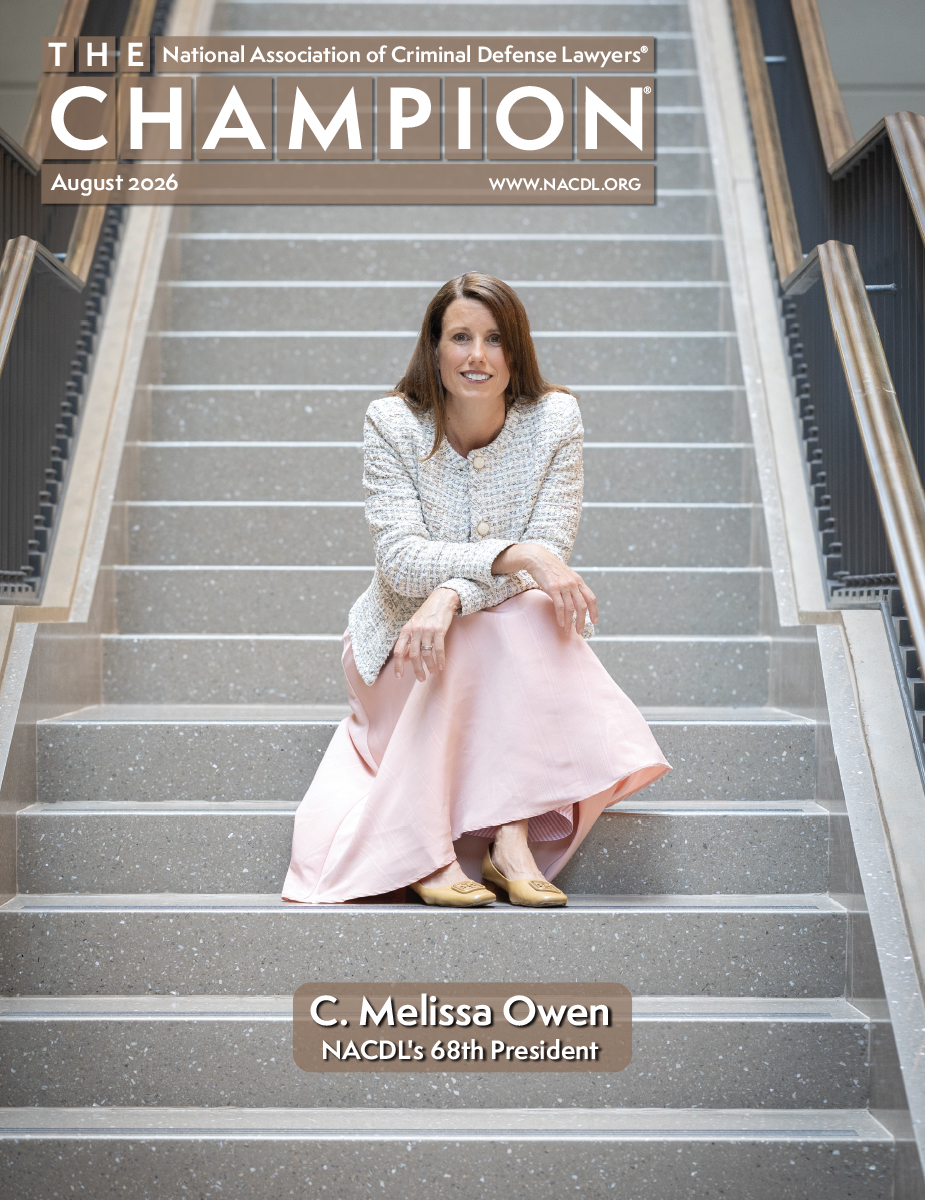
From the President: A System Not Built for Them: Women, Incarceration, and the Defense Bar’s Duty
The steep increase in the number of female defendants presents a growing threat to justice because they are fed into a system that is not built to care for or offer them meaningful rehabilitation.
-
Hey! That’s Not My Car!
The rapid growth of surveillance cameras means that the defense will see an increase in expert comparison testimony, which is testimony that an object owned by defendant (such as a car) is the same object seen in a surveillance video. The lack of published peer-reviewed research supporting experts’ purported ability to accurately compare objects to their images should be a centerpiece of a motion to suppress.
-
Incorporating a Place-Based Lens in Mitigation
Julie Urbanik offers a perspective on the role of “place” in mitigation. She suggests practical methods for building narratives and exhibits that incorporate geographic context. This strategy can help decision-makers approach sentencing options with a fuller “map” of a defendant’s life.
-
NACDL News: NACDL Launches National Voir Dire College
NACDL News for August 2026
-
NACDL News: Nation’s Criminal Defense Bar Applauds the Introduction of the Right to Trial Act
NACDL News for August 2026
-
NACDL News: Nation’s Criminal Defense Bar Condemns Federal Indictment of SPLC
NACDL News for August 2026
-
Pozner on Cross: When Drafting and Delivering a Tightly Scripted Cross-Examination Is Mandatory
A small number of situations exist in which defense counsel should both draft a fully scripted cross-examination chapter and perform it exactly as written – without reordering or rephrasing questions on the fly.
-
Reviews in Review
Reviews in Review for August 2026
-
Sentencing: The First Step Act at the Supreme Court
Defendants bringing First Step Act cases during the 2025-2026 Supreme Court Term were unsuccessful. However, another FSA-based case is queued for the 2026-2027 Term. The Supreme Court granted certiorari in Maxwell v. Thomas. The question presented in Maxwell is “[w]hether a claim regarding application of time credits under the First Step Act of 2018 seeking accelerated transfer to a halfway house or home confinement, can be brought in a habeas petition under 28 U.S.C. § 2241.”
-
Why the Advisory Committee on Evidence Rules Tabled a Proposed Racial Bias Exception
to the ‘No-Impeachment Rule’ in FRE 606(b)
John Siffert and Benjamin Schwartz explain why defense counsel should continue to develop and expand the law permitting juror impeachment post-verdict on racial bias grounds, notwithstanding the Evidence Rules Committee decision not to expand the exceptions in Rule 606(b).