Don't see an answer to your question here? Email us at: summerfellowship@nacdl.org.
- I can't see the application. Am I in the right place?
You have to log into or create your NACDL account (no membership or fee required) in order to complete the application and its components.
- How much does a Fellow get paid?
Each fellow can receive up to $4,500. The stipend pays $562 per week for up to 8 weeks of work.
-
How does payment work?Fellows will be paid semi-monthly, on the 15th and last days of the month. All payments will be by direct deposit and are made 1 pay period behind (in other words, work completed from June 1 to June 15 will be paid on June 30; work completed from June 16 to June 30 will be paid on July 15).
- How many fellows will be selected?
We will be selecting 6 fellows for the summer of 2026.
- When are applications due?
Applications are due Monday, March 9, 2026, at 11:59pm local time (i.e. if you are emailing this from New York, it is due by 11:59 EST; if you are sending it from Oregon, its due by 11:59pm PST).
- When will I be notified if I have been selected?
The Committee intends to notify applicants by March 31st.
- What if I already have a summer internship?
Students may apply to receive funding for a summer internship they have already secured, so long as the internship is with a criminal defense lawyer or public defense office. However, the employer will be required to complete a screening form with NACDL to affirm that the internship will provide the student with opportunities to do substantive work on criminal defense cases.
- What if my summer internship is with a judge in a criminal court?
Fellows must work for a criminal defense lawyer, a law firm where they will be working on criminal cases, or a public defense office. Those clerking for judges are not eligible.
- If I am seeking to be placed by the Fellowship program, do I have any input in where I will be working?
NACDL will have a broad array of potential employers including solo practitioners, firms, and state and federal public defense agencies, located throughout the U.S., to give students a wide variety of options. Students selected for fellowships will be given the opportunity to choose up to 3 sites and to rank their preferences so as to allow students the maximum opportunity to work in places of their choice. The list of participating employers is regularly updated on the Fellowship web page.
- What if I will be receiving academic credit for my internship?
The receipt of academic credit is not a barrier to eligibility for a fellowship; however, students are encouraged to check with their academic institution as to whether they can receive academic credit if they are also receiving compensation for their work.
- What if I will be receiving compensation for my internship?
The receipt of compensation from the employer or another funding source is not a barrier to eligibility for a fellowship.
- I am a 3L student who is graduating in June but planning to intern over the summer. Can I receive a fellowship?
No, this program is only open to current 1L and 2L students, as well as part-time/evening students who will graduate in Dec 2026 or later.
- I am not a US Citizen. I am eligible to receive scholarships and work-study funding at my school. Can I receive a fellowship?
While we welcome the opportunity to support emerging defenders from all backgrounds, current U.S. labor and compensation laws require us to limit fellowship eligibility to applicants who have a valid US work authorization. Fellows are required to complete an I-9 in order to receive compensation. If you are not a US Citizen, please review the I-9 eligibilty criteria prior to applying to determine if you are eligible.
- What if I have additional questions?
Additional questions can be directed to NACDL at: summerfellowship@nacdl.org.
Featured Products
-
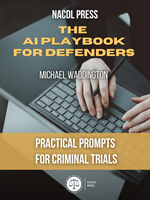
The AI Playbook for Defenders: Practical Prompts for Trials
This book is a practical AI prompt system for serious criminal defense lawyers who want to use artificial intelligence without surrendering strategy, judgment, or control. It is not a collection of generic prompts. It is a structured defense workflow that helps lawyers organize discovery, test theories, identify proof failures, prepare witnesses, challenge forensic evidence, draft motions, build cross-examinations, prepare trial strategy, and protect clients from collateral consequences.
-
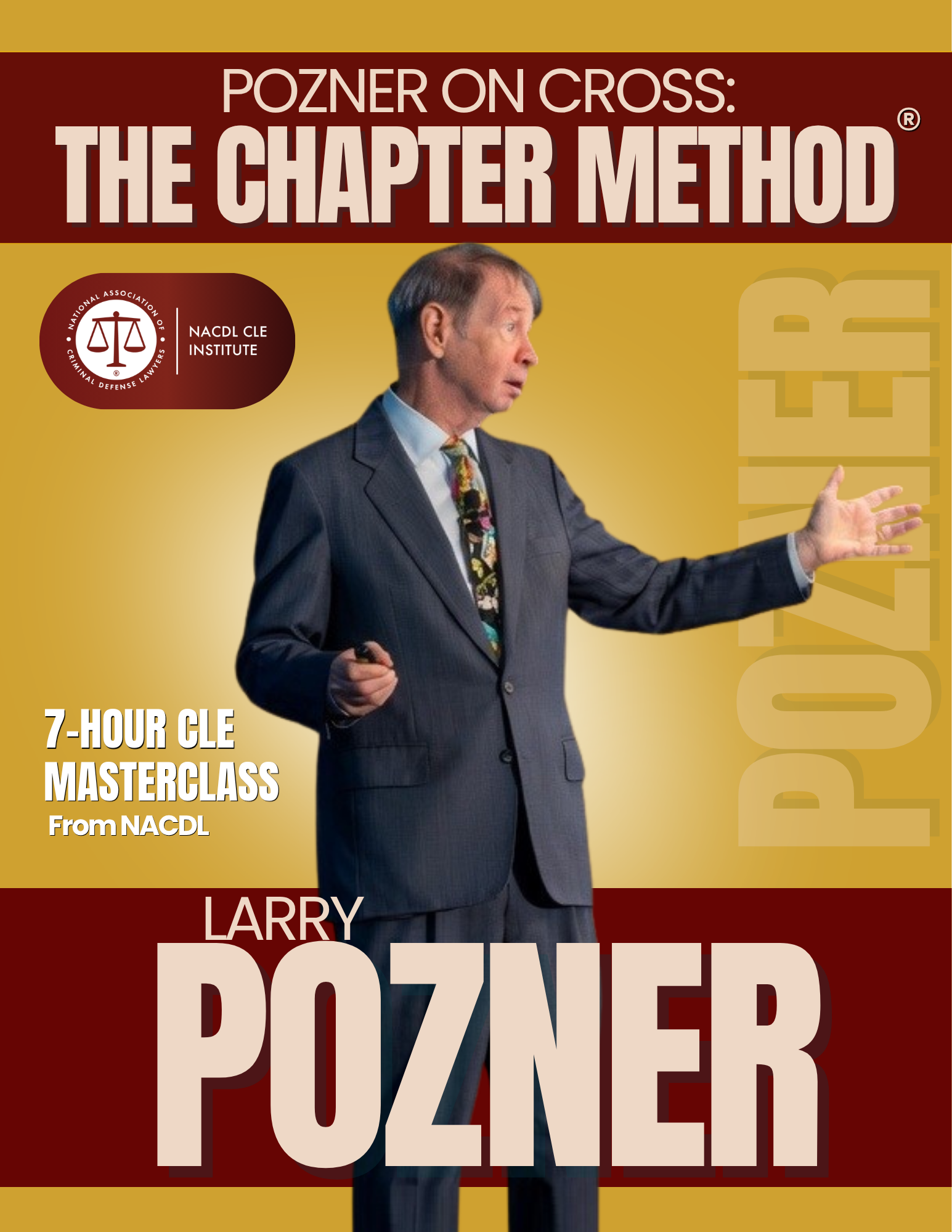
Pozner on Cross: The Chapter Method (7-Hours)
Pozner on Cross: The Chapter Method, is a 7-hour masterclass that teaches a structured approach that organizes cross examination into short, fact-based, story-driven chapters. The method enables lawyers to maintain control of the witness, secure key admissions, and present facts with clarity and precision. Designed for use under the stresses of trial, the course provides practical tools for writing and delivering effective cross examinations with confidence. The techniques of Chapter Method cross-examination work regardless of the field of practice, or the level of a lawyer’s experience.
-
Criminal Evidence Disclosure & Admissibility Handbook
This handbook covers a wide range of crucial topics, including defending against the admission of 404(b) evidence, challenging bad character evidence, and litigating the admissibility of expert testimony. It offers a deep dive into the requirements of Brady and Giglio and uncovering discovery violations and exculpatory evidence before trial. With dedicated sections on digital evidence, forensic analysis, informant disclosures, and suppression hearings, this guide arms defense attorneys with the tools necessary to combat unreliable or improperly admitted evidence.
-
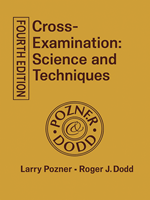
Cross-Examination: Science & Techniques - 4th Edition
Considered the go-to authority for more than 30 years, Pozner and Dodd’s Cross-Examination: Science and Techniques has trained generations of trial attorneys to turn cross-examination into their most powerful courtroom weapon. Its Fourth Edition is now available. This first new edition in seven years adds important material on how to use opening statements to pre-sell your cross-examinations, change the focus of the case, and make your best chapters dominate deliberations—plus a full chapter on cross-examining the crying witness. This is the book that changed how cases are tried.
-
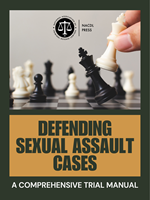
Defending Sexual Assault Cases: A Comprehensive Trial Manual
Defending Sexual Assault Cases: A Comprehensive Trial Manual is not another sex crimes book—it is a strategic operations plan for dismantling narrative-driven prosecutions, built around how jurors actually decide sex crime cases rather than procedural checklists. It explains the moral risk calculus jurors face, the emotional architecture behind verdicts, and how prosecutors win through narrative stacking rather than proof. Most importantly, it shows you how to give jurors a morally defensible path to acquittal.
-
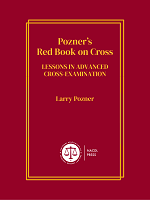
Pozner's Red Book on Cross: Lessons in Advanced Cross-Examination
This compact handbook brings together over 20 of Larry Pozner’s most powerful cross-examination articles, covering core principles and advanced strategies for witness control, impeachment, chaptering, and framing reasonable doubt. Packed with scripting examples, real-world scenarios, and tactical insight, it shows how to press or pivot with purpose, drop weak points, and keep cross disciplined. Whether dismantling an officer’s account, challenging an eyewitness, or exposing investigative gaps, Pozner’s field manual delivers courtroom-ready tools to win.