News and resources discussing efforts to change the manner in which DPAs and NPAs operate, along with several actual DPAs and NPAs, are provided below.
News and Commentary
“DPAs and Plea Agreements: The Tradeoffs ,” Corporate Counsel, January 5, 2015.
The Justice Department is now in your boardroom, in a big way , Fortune, December 22, 2014
Assistant Attorney General Caldwell’s Unconvincing Defense of DPAs / NPAs , FCPA Professor, December, 8, 2014
“DPAs” Have Arrived in England: The Proof of the Pudding Is in the Eating , Raymond L. Sweigart, Pillsbury, February 11, 2014
The Shadow Lengthens: The Continuing Threat of Regulation by Prosecution , James Copland & Isaac Gorodetski, Manhattan Institute for Policy Research, February 2014
Regulators Finding New Ways to Use DPAs, NPAs , Corporate Counsel, July 12, 2013
Do NPAs and DPAs Deter? , FCPA Professor, March 12, 2013
Assistant Attorney General Breuer’s Unconvincing Defense of DPAs / NPAs, FCPA Professor, September 17, 2012
FCPA Enforcement: Why Corporations Support DPAs & NPAs , Corporate Compliance Insights, April 12, 2012
NPAs, DPAs, and the FCPA , FCPA Professor, February 9, 2010
Proposal Seeks More Oversight of Justice Department's Pre-Trial Diversion Agreements , Shana-Tara Regon, NACDL, Washington Legal Foundation, September 25, 2009
Continue reading below
Featured Products
It's Not Just Voir Dire: How to Communicate & Convince Juries
This program helps defense counsel to uncover juror beliefs, challenge biased jurors for cause, preserve credibility with judges, and build persuasive narratives for trial. You'll also explore cutting-edge research and emerging technology—from social science insights about race and bias in juries to new tools for focus groups and mock trials. Master your techniques in authenticity, storytelling, and emotional intelligence in the courtroom, while reinforcing foundational principles like the presumption of innocence and reasonable doubt throughout jury selection and trial.
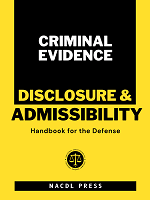
Criminal Evidence Disclosure & Admissibility Handbook
This handbook covers a wide range of crucial topics, including defending against the admission of 404(b) evidence, challenging bad character evidence, and litigating the admissibility of expert testimony. It offers a deep dive into the requirements of Brady and Giglio and uncovering discovery violations and exculpatory evidence before trial. With dedicated sections on digital evidence, forensic analysis, informant disclosures, and suppression hearings, this guide arms defense attorneys with the tools necessary to combat unreliable or improperly admitted evidence.
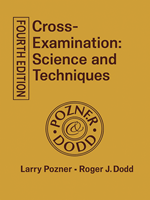
Cross-Examination: Science & Techniques - 4th Edition
Considered the go-to authority for more than 30 years, Pozner and Dodd’s Cross-Examination: Science and Techniques has trained generations of trial attorneys to turn cross-examination into their most powerful courtroom weapon. Its Fourth Edition is now available. This first new edition in seven years adds important material on how to use opening statements to pre-sell your cross-examinations, change the focus of the case, and make your best chapters dominate deliberations—plus a full chapter on cross-examining the crying witness. This is the book that changed how cases are tried.
Defending Sexual Assault Cases: A Comprehensive Trial Manual
Defending Sexual Assault Cases: A Comprehensive Trial Manual is not another sex crimes book—it is a strategic operations plan for dismantling narrative-driven prosecutions, built around how jurors actually decide sex crime cases rather than procedural checklists. It explains the moral risk calculus jurors face, the emotional architecture behind verdicts, and how prosecutors win through narrative stacking rather than proof. Most importantly, it shows you how to give jurors a morally defensible path to acquittal.
Pozner's Red Book on Cross: Lessons in Advanced Cross-Examination
This compact handbook brings together over 20 of Larry Pozner’s most powerful cross-examination articles, covering core principles and advanced strategies for witness control, impeachment, chaptering, and framing reasonable doubt. Packed with scripting examples, real-world scenarios, and tactical insight, it shows how to press or pivot with purpose, drop weak points, and keep cross disciplined. Whether dismantling an officer’s account, challenging an eyewitness, or exposing investigative gaps, Pozner’s field manual delivers courtroom-ready tools to win.
Alert: Differences in DPAs and NPAs Narrowing?, Compliance Week, July 9, 2009
Resources
Brandon L. Garrett and Jon Ashley, Corporate Prosecution Registry , University of Virginia School of Law
The Shadow Lengthens: The Continuing Threat of Regulation by Prosecution , James Copland & Isaac Gorodetski, Manhattan Institute for Policy Research, February 2014
2013 Year-End Update on Corporate NPAs and DPAs, Gibson Dunn, January 7, 2014
2013 Mid-Year Update on Corporate Deferred Prosecution and Non-Prosecution Agreements , Harvard Law School Forum on Corporate Governance and Financial Regulation, July 24, 2013
2012 Mid-Year Update on Corporate Deferred Prosecution and Non-Prosecution Agreements , Gibson Dunn, July 10, 2012
The Shadow Regulatory State: The Rise of Deferred Prosecution Agreements, James Copland, Manhattan Institute for Policy Research, May 2012
Memo from Acting Deputy Attorney General Gary G. Grindler, Additional Guidance on the Use of Monitors in DPAs and NPAs with Corporations (May 25, 2010) (Grindler Memo)
Government Accountability Office, Report to Congressional Requesters, Corporate Crime: DOJ Has Taken Steps to Better Track Its Deferred and Non-Prosecution Agreements, but Should Evaluate Effectiveness (January 2010)
Memo from Acting Deputy Attorney General Craig S. Morford, Selection and Use of Monitors in DPAs and NPAs with Corporations (March 7, 2008) (Morford Memo)